Module Specs · Lesson 4 of 5 · About 9 min
Tarot: Meet the Deck
Spread all 78 cards on the floor and the pattern appears.
This pillar is set to go in order.
Start with one card and one question: what do you see?
Hold any picture in front of a friend and ask what they notice first. One person sees the bright sky, another the lonely figure in the corner. Neither is wrong. That gap between what you see and what someone else sees is where tarot does its work.
What tarot is
Tarot is a deck of 78 illustrated cards, and it is a tool. You ask a question, draw cards, and let the pictures speak to your thinking and your intuition.
Try it
How do you hold a reading?
Which of these fits the way this school teaches tarot?
-
It's a tool. Use it to reflect, to get guidance, or to look ahead.
Read the note
A good answer. What you use it for is up to you. Many people use it to slow down, notice patterns, and see a situation from a new angle. Many use it to look ahead, reading the cards as a forecast of where things are heading. Many do both in the same reading. None of these is the wrong way to use it.
-
There's one right way to shuffle, draw and read.
Read the note
Worth a second look. There is no single right way to shuffle, draw, or read, and this school does not hand you hard rules.
-
A reading is a sealed fate.
Read the note
Worth a second look. It is a tool, not a verdict. Plenty of readers treat a forecast as a likely path rather than a sealed fate. How you hold a reading is up to you.
-
You have to believe in it for it to work.
Read the note
Worth a second look. You do not have to believe in it. You can work with tarot as a practical tool, as a spiritual practice, or both.
Meet the deck
A tarot deck looks like a pile of strangers until you see how it is organized. Once you see the structure, every card has a home.
- Major Arcana: 22 cards, numbered 0 to 21, with names like The Fool, The Lovers, and The Sun. They show big themes and turning points
- Minor Arcana: 56 cards in four suits. They show everyday life: your work, feelings, thoughts, and home
Each suit has 14 cards: Ace through 10, plus four court cards (Page, Knight, Queen, King).
Try it
Which suit?
Each suit has its own business. Guess where each word belongs, and the card tells you why once it lands. There's no score, and you can move a card again.
-
Wands
Fire
-
Energy
Why
Wands, Fire: energy, creativity, ambition, action. Feels hot, quick, restless.
-
Creativity
Why
A Wands card often asks "What do I want to do?"
-
Drive
Why
Wands: energy, creativity, drive.
-
Energy
-
Cups
Water
-
Feelings
Why
Cups, Water: feelings, relationships, intuition, dreams. Feels flowing, deep, moody.
-
Relationships
Why
A Cups card often asks "How do I feel?"
-
Intuition
Why
Cups: feelings, relationships, intuition.
-
Feelings
-
Swords
Air
-
Thoughts
Why
Swords, Air: thoughts, words, decisions, conflict. Feels sharp, clear, cool.
-
Words
Why
A Swords card often asks "What do I think, and what do I say?"
-
Decisions
Why
Swords: thoughts, words, decisions.
-
Thoughts
-
Pentacles
Earth
-
Body
Why
Pentacles, Earth: body, money, work, home, the everyday. Feels steady, slow, solid.
-
Money
Why
A Pentacles card often asks "What do I have, and what does it need?"
-
Work
Why
Pentacles: body, money, work, the material world.
-
Body
Some writers and decks pair the suits differently, so if you meet another pairing, you are not wrong.
The Major Arcana as a story
Twenty-two cards, one long walk.
Read the Major Arcana in order and a story appears. Someone sets out, learns, gets tested, falls apart, and comes back whole. A popular way to read it is as the Fool's journey: card 0, The Fool, is the traveler, and every other Major is a stop on the road. This way of reading was shaped by tarot writers in the 20th century. It is a useful lens, not an ancient teaching, and you can use it, change it, or leave it.
Try it
Five stops on the road
Before you read a single word about the card, let it speak to you. Look at each picture, say one word for it out loud, then turn it over. Look, feel, write, then read.
-
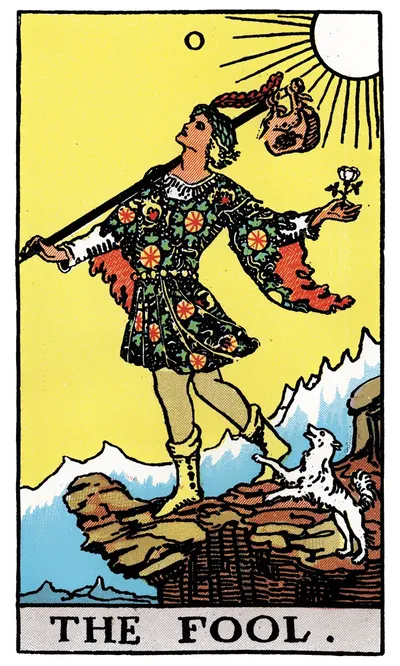 The Fool
Card 0: the traveler
Major Arcana · 0
The Fool
New start · Trust · Leap
Take the first step before you feel ready. Today favors the brave and the curious.
Traditional meaning
Beginnings, innocence, spontaneity, and a free spirit. A leap into the unknown, taken with trust.
-
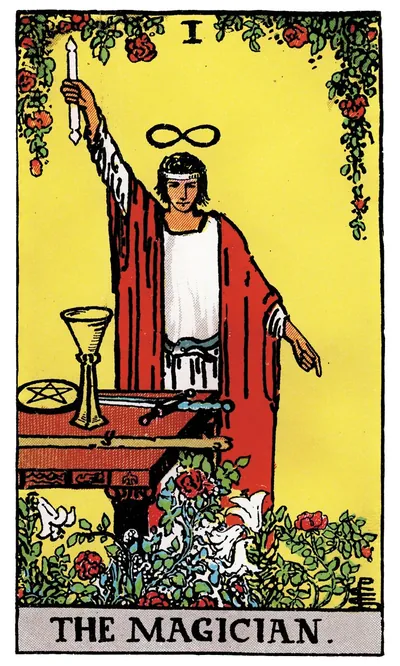 The Magician
Part 1: Learning the world
Major Arcana · 1
The Magician
Skill · Focus · Action
You have every tool you need. Choose one thing and put your whole will behind it.
Traditional meaning
Manifestation, resourcefulness, power, and inspired action. Having the skill and the tools to make things happen.
-
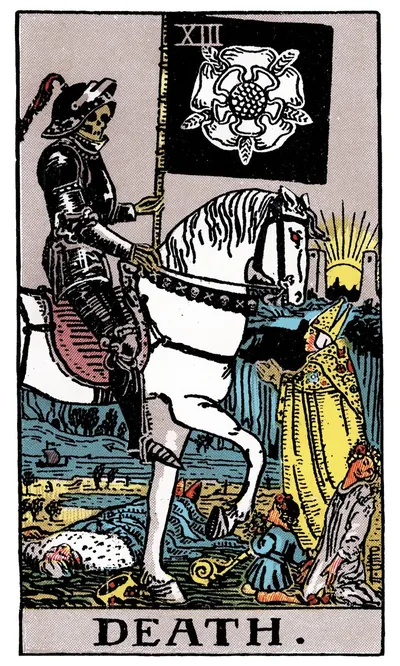 Death
Part 2: Turning inward
Major Arcana · 13
Death
Endings · Release · Rebirth
Let something finish. The ground is clearing for what comes next.
Traditional meaning
Endings, change, transformation, and transition. One chapter closing to make room for the next.
-
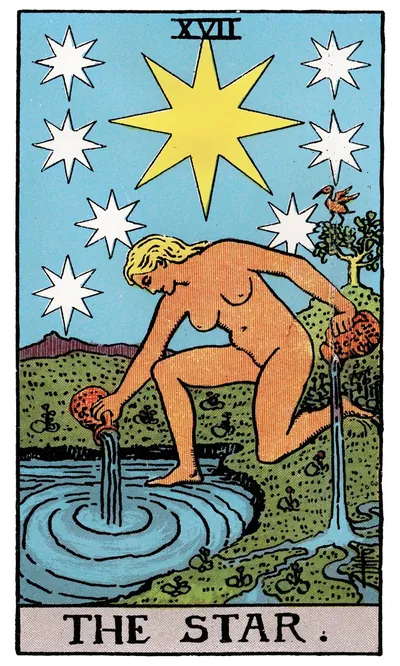 The Star
Part 3: Facing the dark, then the light
Major Arcana · 17
The Star
Hope · Healing · Inspiration
Breathe. Wish. Pour a little hope back into yourself.
Traditional meaning
Hope, faith, purpose, renewal, and spirituality. Healing after hardship.
-
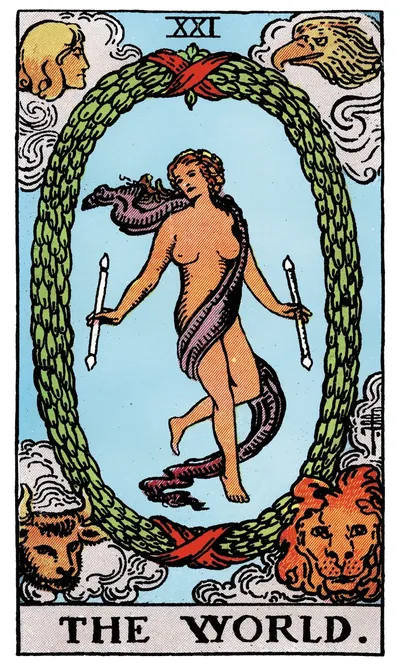 The World
Card 21: the end of the walk
Major Arcana · 21
The World
Completion · Wholeness · Celebration
A chapter is closing well. Take a bow, then look at what's next.
Traditional meaning
Completion, integration, accomplishment, and travel. The end of a cycle with a sense of wholeness.
Every card is face up. Which one surprised you?
Try this now: find your card in each part
Look through the three parts and pick one card from each that you feel most drawn to, and one you would rather skip. Write one sentence on why. Notice which part of the journey you feel you are in right now.
Try this now: seven days, one card
For one week, pull your daily card each morning. Write your first impression before reading the description. At the end of the week, read your seven notes in a row and see what you notice.
The plan for this module
Module spec: Tarot Foundation
A free 13-lesson foundation course in the base membership, taught with the original 1909 Rider-Waite-Smith cards and credited to Pamela Colman Smith. Each lesson pairs your text with one or two hands-on blocks, and the course plugs into what is already live: the daily pull, the reading journal and the three-card spread. Paid levels come later, when you define them.
- Lessons in the full module
- What tarot is and is not: a tool for reflection, guidance, or looking ahead; the real history; credit to Pamela Colman Smith
- Meet the deck: 78 cards, Major and Minor Arcana, courts; choosing a deck; caring for it
- Your first pull: first impression before any description, then compare
- The Major Arcana as a story: the 22 cards in groups, as a journey
- Suits and elements: Wands, Cups, Swords, Pentacles, linked to The Elements
- Numbers in tarot: Ace through 10 as a cycle, linked to Numerology
- Court cards: read as people, moods, or parts of yourself
- Reversals: three ways to handle them, including not using them
- Asking good questions and preparing to read
- Spreads: one, three, and five cards
- Reading the story: how cards speak to each other, journaling, following up
- Reading for yourself without over-relying
- Reading for others and ethics, with the book-a-reading buttons and the closing safety note
- What’s interactive
- On this page: quick check on how to hold a reading (Lesson 1)
- On this page: sort the suit words into Wands, Cups, Swords, Pentacles (Lessons 2 and 5)
- On this page: guess-first flip cards with the real 1909 cards and the daily-pull card text (Lessons 3 and 4)
- Already live: the daily pull at /daily-card/ and a reading journal that remembers every pull at /daily-card/journal/
- Already live: a three-card spread at /daily-card/spread/, ready for Lesson 10
- Could add: lay the 22 Majors in order and see the three parts appear (Lesson 4)
- Could add: tell the cycle, Ace to Ten of one suit, with the Five in four suits side by side (Lesson 6)
- Could add: court card sorter, person, mood or part of you (Lesson 7)
- Could add: count the suits in a spread and see which element is missing (Lesson 5)
- Your words on this page
Your approved Tarot lessons (Oct 15), word for word, trimmed only: Lesson 1 opening, “What tarot is”, “How to hold it” (as the quick-check answers) and “Two things to know before you start” (the one safety line); Lesson 2 opening, the two halves and the four suits; Lesson 3 opening line and “look, feel, write, then read”; Lesson 3 “Try this now: seven days, one card”; Lesson 4 opening, “Reading the Majors in a reading” and “Try this now: find your card in each part”; Lesson 5 suit lines and “Reading by suit” questions (shown after each sorted card). The lesson outline is your Foundation Course Outline (Oct 15). The back of each flip card is the daily-pull card text.
- Placeholder on this page
The page title, the frame note at the top, the quick-check question and its four answer labels, the sorting instructions, the second sentence of the flip-card instructions, the block headings (“How do you hold a reading?”, “Which suit?”, “Five stops on the road”), the small lines on the flip cards for cards 0 and 21, and this spec. Still marked “Accuracy to verify” in your notes: suit keywords and suit-element pairings, the history dates, who shaped the Fool’s journey, and Strength 8 / Justice 11.
- Decisions for you
- Reversals: your daily pull is upright only for now. After Lesson 8, should the daily pull and the spread offer reversed cards?
- Your About page mentions a tarot deck of your own. Teach with the 1909 cards only, or bring your deck in later as a second set of pictures?
- Book-a-reading buttons ($100 for 30 min, $200 for 60 min): only in Lesson 13 as your outline says, or a quiet link on the daily pull too?
- This page shows your Lesson 1 safety note once and no extra safety box. Keep it that way across all 13 lessons?
- Paid levels: which comes first, if any: deepening (Celtic Cross, timing), reading for others, or other decks?
- Build effort
About 2 weeks of build time once Lessons 7 to 13 are drafted and approved, plus your voice notes for the 78-card reference.
Saved on this device only. Create an account to keep it everywhere.